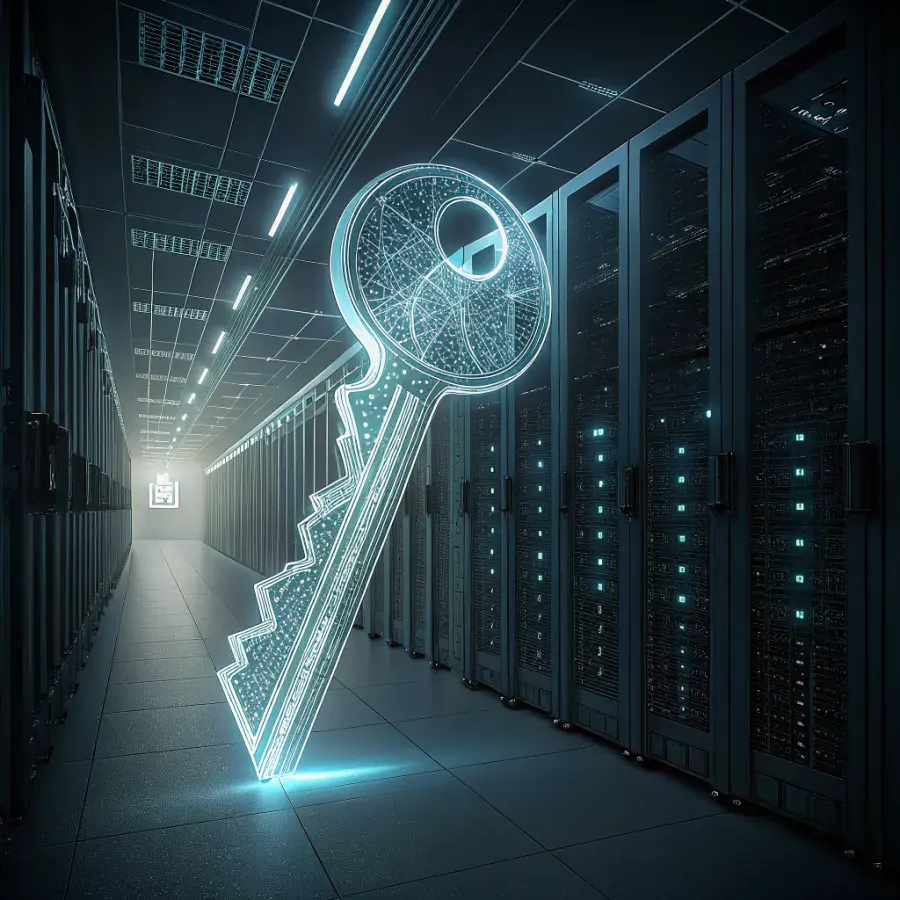
The Big Blind Spot of AI: The Invisible Risk of "Ghost" Credentials
2026-03-30 · By Esteban Rey (@Kilowatto) · 8,292 reads
Narrado con la voz sintética de Larry. El texto es de Esteban; la voz no es humana. Read the transcript.
In the world of corporate cybersecurity, we've always had a favorite culprit: the human factor. The employee who clicks where they shouldn't, the executive who uses the same password for everything, or the administrator who forgets to close a privileged session. But while we're still obsessed with educating humans about phishing culture, a new player has taken the keys to the house and is moving at a speed that our defenses can't even register: AI agents.
Recent reports from the trenches of software engineering and cloud infrastructure are clear: AI agents are no longer just passive query tools; today, they're operational entities that live deep within our organizations. They're generating and using credentials autonomously on endpoints, development environments (IDEs), and continuous integration pipelines (CI/CD).
The problem is that they're doing it in a completely blind spot for traditional governance.
The Anatomy of "Agent Sprawl"
So far, Identity and Access Management (IAM) has been a discipline designed by humans for humans. We have clear protocols for when someone joins the company, changes roles, or gets fired. But what happens when the one requesting access doesn't have a face, doesn't have a paycheck, and can create a thousand access "keys" in a second to complete a coding task?
We're experiencing a phenomenon of "Credential Sprawl" of a purely non-human nature. AI agents, in their quest to automate processes, optimize workflows, or self-correct software errors, are creating access tokens, API keys, and connection secrets dynamically. These credentials are born outside the reach of traditional secret management tools.
They're, in essence, ghost credentials. They live on the periphery of systems, granting permissions for one machine to talk to another, access a critical storage bucket, or deploy a container in production. All this happens without a security administrator signing off on a single manual authorization.
Why AI Agents Are Expanding the Blast Radius
The risk doesn't just lie in the existence of these credentials but in the complete lack of a lifecycle for them. There are three critical factors that turn this "sprawl" into a time bomb for any CISO:
- The invisibility of non-human access: Most current auditing systems are trained to detect anomalies in human behavior (unusual hours, unknown IPs, atypical data volumes). However, an AI agent doesn't get tired, operates 24/7, and its access pattern can perfectly mimic the legitimate technical noise of a software deployment. Blind spots form precisely where AI interacts with development systems, bypassing the security perimeters that once protected the business core.
- Vulnerability at the "Time of Use": Companies usually trust that their secrets are "safe" because they're stored in a digital vault. However, AI agents need to extract and use these credentials "on the fly" while executing autonomous processes. It's in that precise millisecond of use that credentials are most vulnerable to being intercepted, leaked, or persisted in debug logs if the agent isn't operating under a strictly audited and encapsulated environment.
- The absence of defensible audit trails: If an incident occurs and we discover that a database was compromised using a key generated by an AI agent, how do we reconstruct the chain of responsibility? Today, the traceability between a human instruction ("optimize this process") and the machine's execution ("create this access to achieve it") is an invisible thread. The lack of a record linking the agent's identity to the responsible human's identity creates an insurmountable legal and technical gap.
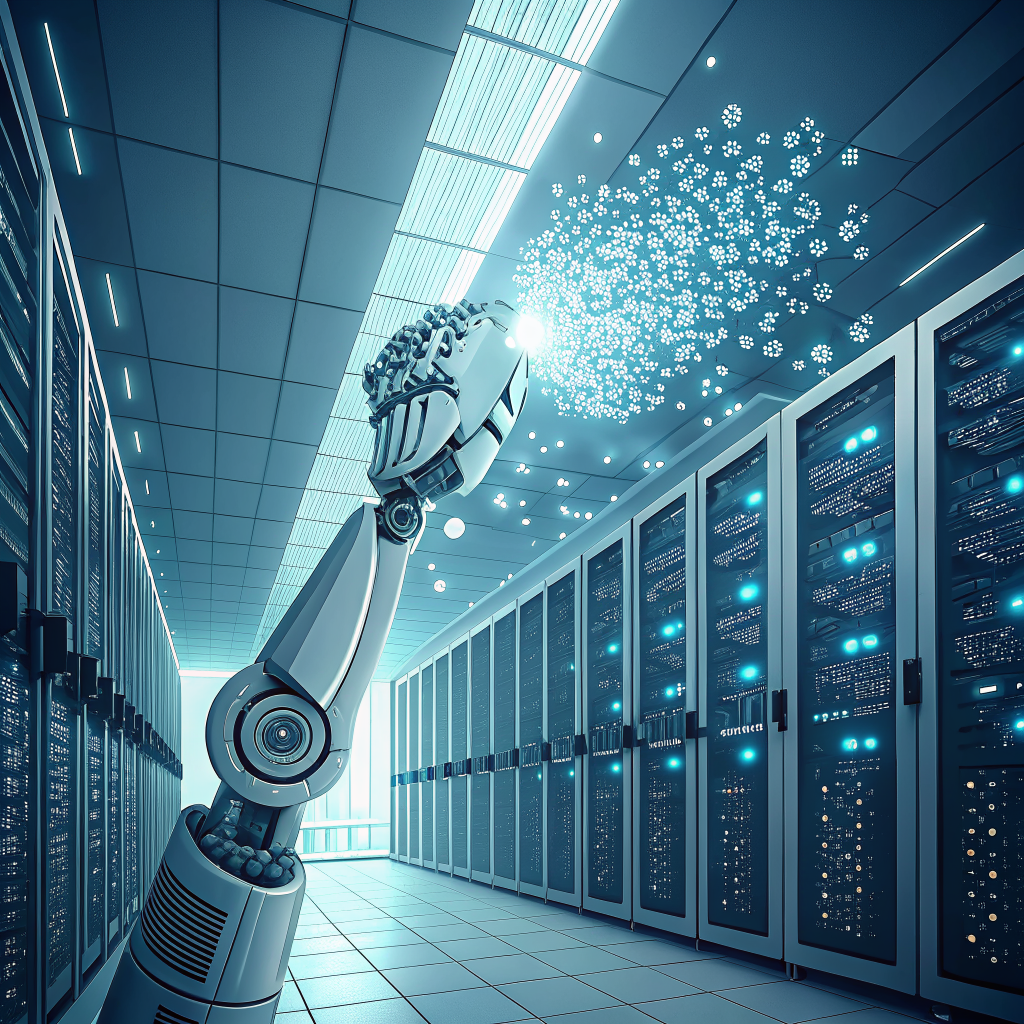
The Risk of "Delegated Sovereignty"
What really worries me is that we're delegating the sovereignty of our infrastructure to algorithmic intermediaries. When we allow an AI agent to manage a CI/CD pipeline without dedicated secret supervision, we're accepting that the machine decides what level of privilege it needs to function.
Historically, the principle of "least privilege" was sacred. Today, the speed of AI is forcing developers to grant broad permissions to agents to avoid automation from stopping. It's the most dangerous trade-off of the decade: we're exchanging security for deployment speed.
Conclusion: From Human Identity to Agent Identity
The future of corporate productivity is undoubtedly autonomous. We can't and shouldn't stop the implementation of these agents. However, we can't allow speed to sacrifice the integrity of the company. We need an urgent transition: we must move from an "anthropocentric" identity management to a Machine and Agent Identity Management.
We must be able to:
- Discover: Map in real-time how many credentials have been created by non-human processes.
- Secure: Ensure that the secret is only visible to the agent at the exact moment of its execution and is destroyed immediately after.
- Audit: Create audit records that unbreakably link each machine action to a security policy defined by a human.
AI is moving at an exponential speed. Our security, unfortunately, is still moving at a linear speed. If we don't start illuminating these blind spots of ghost credentials, we'll wake up in a world where we're no longer the owners of the access to our own technology.
Do you know how many credentials your AI agents have created in the last hour? If you don't have the answer, the risk is already yours.
 Larry
Larry
Comments
Be the first to comment.