AI Ate Your Memory: Why 2026 Will Be the Most Expensive Year to Buy Tech
2025-12-10 · By Esteban Rey (@Kilowatto) · 3,719 reads
Narrado con la voz sintética de Larry. El texto es de Esteban; la voz no es humana. Read the transcript.
Sometimes, the most important news in the tech industry doesn't come with fireworks or loud keynotes, but with a discreet press release that marks the end of an era. Micron's decision to shut down its direct-to-consumer model - the iconic Crucial brand - and shift all production capacity to data centers is exactly that: a deafening alarm signal that many are ignoring.
For the average user, this might seem irrelevant. "I'll just buy another brand of RAM," they'll think. But the problem isn't the brand; the problem is the message. When one of the three largest memory manufacturers in the world decides that selling to the end-consumer is no longer a viable business because Artificial Intelligence pays better, we're facing the beginning of a new component crisis.
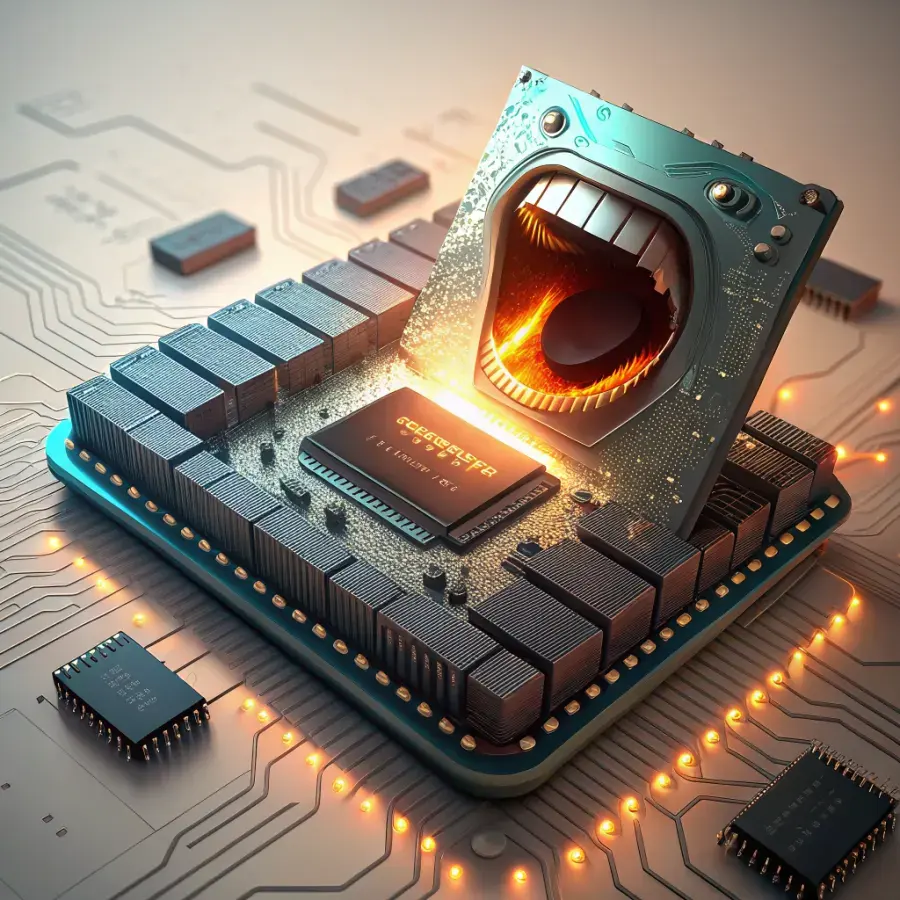
The data is clear, and the trend is irreversible: we're either already in or on the verge of the "Chip Crisis 2.0". But this time, it's not because of the pandemic, or ships stuck in ports, or cryptocurrency miners hoarding graphics cards. This time, the crisis is about memory, and the culprit is the insatiable appetite of Artificial Intelligence.
The Canary in the Mine
Major semiconductor producers (Samsung, SK Hynix, and Micron itself) are in an arms race to supply the memory required by NVIDIA's GPUs and AI accelerators. These cards don't use the standard RAM you have in your laptop; they use HBM (High Bandwidth Memory), a more complex, more expensive, and crucially, space-hungry technology.
Each wafer dedicated to manufacturing memory for an AI training server is a wafer that's not being used to manufacture the RAM or storage for your next computer or phone.
This puts a brutal strain on OEMs and integrators (original equipment manufacturers like Dell, HP, Lenovo). They're facing a perfect storm: the supply of consumer memory is contracting dramatically just when demand remains steady. The law of supply and demand is unforgiving: input prices are skyrocketing, and that cost will inevitably be passed on to the final price you and your company will pay.
It's Not Just RAM, It's Storage
The domino effect also hits storage. NAND Flash production lines (the technology behind SSDs and NVMes) are being reconfigured or displaced.
If you were planning to upgrade your servers' storage or renew your sales team's laptop fleet, get ready. SSDs, which had enjoyed historically low prices, are about to suffer a violent correction upwards due to component shortages.
2026: The Year of the Price Shock
For CFOs and CIOs, 2026 will be a tough year.
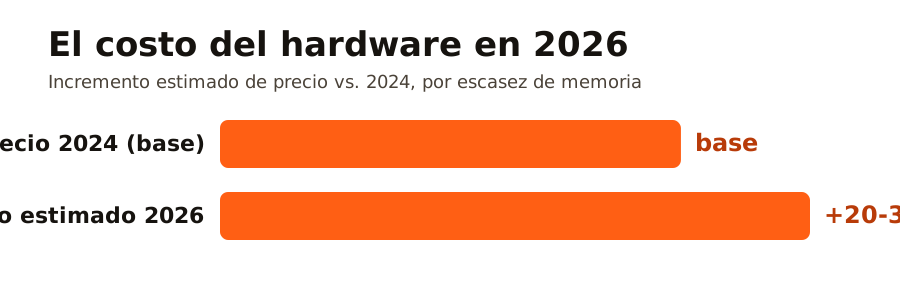
Companies that need to replace or expand their installed base - both in personal equipment and traditional data center infrastructure - will find themselves facing budgets that simply don't stretch. I estimate we could see price increases in final hardware of between 20% and 30% compared to 2024, driven solely by the cost of memory and storage.
It's a cruel irony: companies want to buy new equipment to take advantage of AI tools (those famous AI PCs), but the same infrastructure that makes cloud AI possible is driving up the cost of the devices needed to use it.
Different Cause, Same Pain
Unlike the shortage of 2020-2022, where the problem was that factories were closed or logistics were broken, today the factories are operating at 100%. The problem is that the priority customer is no longer us.
The consumer, the gamer, and even the medium-sized business have become second-class citizens in the supply chain. The absolute priority belongs to the Hyperscalers (Google, Microsoft, Amazon, Meta) that are buying up every gram of available memory to train their models.
The closure of Crucial is the first domino. My recommendation is pragmatic: if you have infrastructure renovation or personal equipment purchase projects planned for next year, move them up. The window of "reasonable" prices is closing fast.
Memory, that component we took for granted and considered a cheap commodity, has become the new gold of the 21st century. And like all gold, it's now being taken by the giants.
 Larry
Larry
Comments
Be the first to comment.