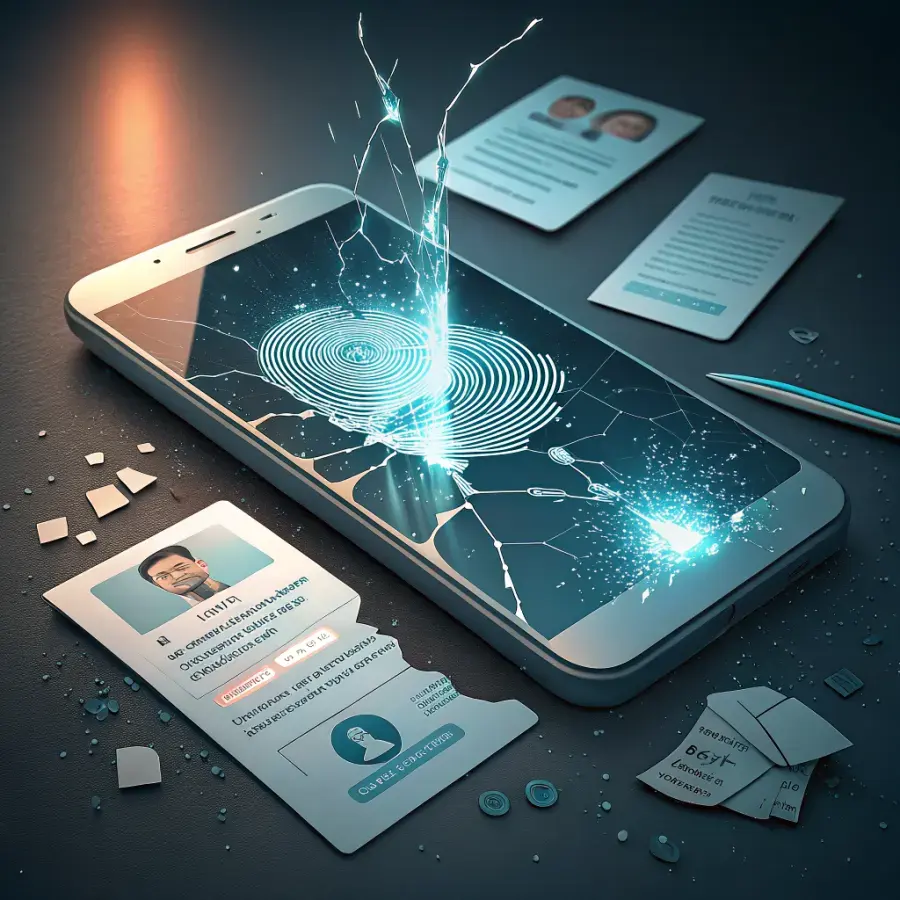
The Blueprint for Disaster: When Technical Incompetence Exposes Citizens
2026-01-12 · By Esteban Rey (@Kilowatto) · 10,201 reads
Narrado con la voz sintética de Larry. El texto es de Esteban; la voz no es humana. Read the transcript.
There's a maxim in project management, both in engineering and public policy, that rarely fails: a bad idea with poor execution is the perfect recipe for disaster.
What we're experiencing in Mexico at the start of 2026 is not a fortuitous accident or an unpredictable surprise; it's the chronicle of a foretold catastrophe. Just a few months ago, under the banner of national security and the fight against extortion, a reform was approved that many of us warned would be toxic. I'm referring to the new Law on Telecommunications and Broadcasting, published on July 16, 2025, which gave life to the new mandatory registry of mobile phone users.
The government's premise was seductive on paper but draconian in practice: building an exhaustive registry that linked our biological and legal identity with our phone line. However, many questions were left floating in the air, tainted by political rhetoric: Who will protect this database that contains the metadata of our lives? How will it really be used? Who will have access? And the most disturbing of all: How can I, as a citizen, know who and how my data is being used?
Today, unfortunately, we have the answers. And they're terrifying.
Historical Stubbornness and Citizen Rejection
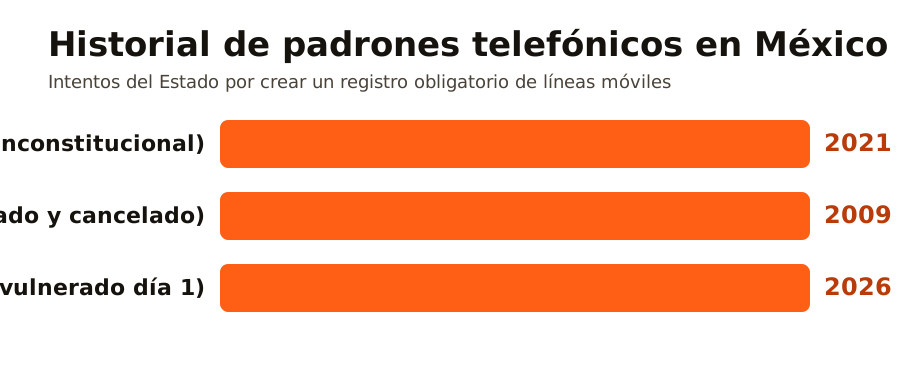
The idea of having a registry of phone users is not new in Mexico; it's a cyclical obsession of the State. We already stumbled upon this stone in 2009 with the failed RENAUT of Felipe Calderón's administration, which ended with the database being sold on the black market in Tepito for pennies, and where, ironically, the president himself was registered with thousands of lines. We stumbled again in 2021 with the PANAUT, an even more aggressive attempt that required biometrics and was fortunately halted and declared unconstitutional by the Supreme Court in 2022.
The low participation of the population in this new attempt in 2026 is not apathy; it's an act of self-defense. It's a reflection of the rejection of intrusive surveillance of citizens' privacy. People intuit that handing over their data to the State — or to concessionaires obliged by the State — does not guarantee security, but rather puts them in a showcase to be watched or, worse, commercialized.
The Execution of Telcel: "Vibe Coding" and Negligence
But if the legislative idea was already bad due to its invasive nature, the technical execution we saw this January was, to put it mildly, criminally negligent.
To "make the drink even more bitter," the implementation that Telcel — the dominant operator with over 80 million lines — deployed to generate this registry was an insult to the most basic cybersecurity practices. On January 9, 2026, the first day of the mandatory registry, its digital infrastructure collapsed not due to saturation, but due to incompetence.
I must confess something: since I wasn't personally affected by this law on my main line, I didn't pay much attention initially. However, I actively participate in several cybersecurity and technology forums — some populated by highly qualified people, ethical "White Hats," and others by enthusiasts with a lot of free time —. What I saw in those spaces was alarming.
No NSA tools or Russian hackers were needed to exploit the system. With a bit of willingness and basic web development knowledge, anyone could exploit the vulnerability. What journalistic reports and independent forensic analyses revealed was a software architecture made on the fly, what developers call "vibe coding": programming by intuition, without stress tests, without security audits, and hoping that "good vibes" will keep the server secure.
Anatomy of a Leak: The Exposed "Master Key"
The error was so elementary that it hurts to explain. The vulnerability resided in the eligibility API. When a user (or an attacker) entered a cell phone number in the web form to check if they should register, the server didn't respond with a simple "YES" or "NO".
Instead, the server ("Backend") returned a JSON object (a plain text format used for data exchange) that contained the complete client record.
Anyone who knew how to open the browser's developer console could see, in plain text:
- Full name: Name, paternal and maternal surname.
- Legal identifiers: CURP and RFC.
- Contact information: Personal email and date of birth.
- Technical data: Client ID and account status.
This is not just a simple leak of a phone number. By exposing the RFC and CURP along with the name and phone number, Telcel handed over the "master key" for identity theft. With these data, a criminal can perform banking transactions, request credits in the victim's name, access government portals (such as the SAT) or execute SIM Swapping attacks (line hijacking) with astonishing ease.
The most ironic and tragic thing is that this law was sold as a tool to prevent extortion. The result is diametrically opposite: now extortionists have a validated, updated, and free directory to make calls with "surgical precision," citing the full name and tax data of the victim to sow terror.
Even after the scandal broke out on social media and independent media, the technical response was a cosmetic patch on the visual interface (Frontend), leaving the server's access points exposed for hours. It was sustained negligence.
The Tip of the Iceberg: Who Watches the Watcher?
This incident with Telcel should turn on all the red alarms on the national board. We can't see it as an isolated fact of a private company; it's the tip of the iceberg of a systemic problem in Mexico's digital infrastructure and its concessionaires.
If the largest and richest telecommunications operator in Latin America, with theoretically unlimited resources, couldn't protect a basic API on the first day of a legal mandate, what can we expect from projects directly managed by the government?
I'm referring to much more sensitive initiatives that are already underway or in planning:
- The Biometric CURP: A project that aims to centralize not only our alphanumeric data but also our immutable physical traits (iris, fingerprints, face). If that database leaks, you can't "change" your fingerprints like you change a password.
- The Electoral Registry: Especially after the modifications of the new electoral law, where the custody and use of INE data have been a topic of political dispute.
- The IMSS and Banco del Bienestar databases: Gigantic repositories of health and financial information of the most vulnerable sectors of the population.
The brutal lesson of the 2026 phone registry is that the State's regulatory capacity to demand data is inversely proportional to its technical capacity to protect it. We're building information repositories ("honeypots") that are irresistible to cybercrime, without having the necessary locks.
Who Watches the Watcher?
The fundamental question in a digital democracy is: Who watches the one who watches and surveils us?
Today, the answer seems to be "no one." Or worse, "we ourselves, when it's already too late." The autonomous bodies that should serve as a counterbalance, such as the INAI (now absorbed in functions by the Anticorruption Secretariat), face political challenges that dilute their ability to impose immediate sanctions against corporate or governmental monsters.
The Telcel leak demonstrated that "digital civil death" — the threat of disconnecting those who don't register — is a coercion that puts the citizen between a rock and a hard place: either you hand over your privacy to an insecure system, or you're left disconnected.
As technologists, analysts, and citizens, we can't normalize incompetence. A bad idea (massive indiscriminate registration) executed with feet (basic API vulnerabilities) is not "digital transformation," it's systemic negligence.
If we don't demand external, real, and public audits; if there are no devastating legal consequences for companies and officials who expose our data; then we're not living in an information society, but in an exposure society.
The 2026 registry has already failed in its promise of security. The only thing it has successfully demonstrated is how fragile we are when the State decides to watch us without knowing how to take care of us.
 Larry
Larry
Comments
Be the first to comment.